
How to Prepare for Your Adventure
April 1–4, 2027 | Patagonia, Arizona
Ruta del Jefe is more than a bike ride. It's four days of adventure, education, and community in the Arizona–Sonora borderlands, an opportunity to explore extraordinary landscapes, learn from people working throughout the region, and connect with others who share a love for cycling and the outdoors.
Whether you're joining us for your first gravel adventure or you're an experienced backcountry cyclist, a little preparation will go a long way toward making your experience safe, enjoyable, and meaningful.
This guide will help you get ready for everything from Saturday's rides to life at basecamp.

Choose the Right Route for You
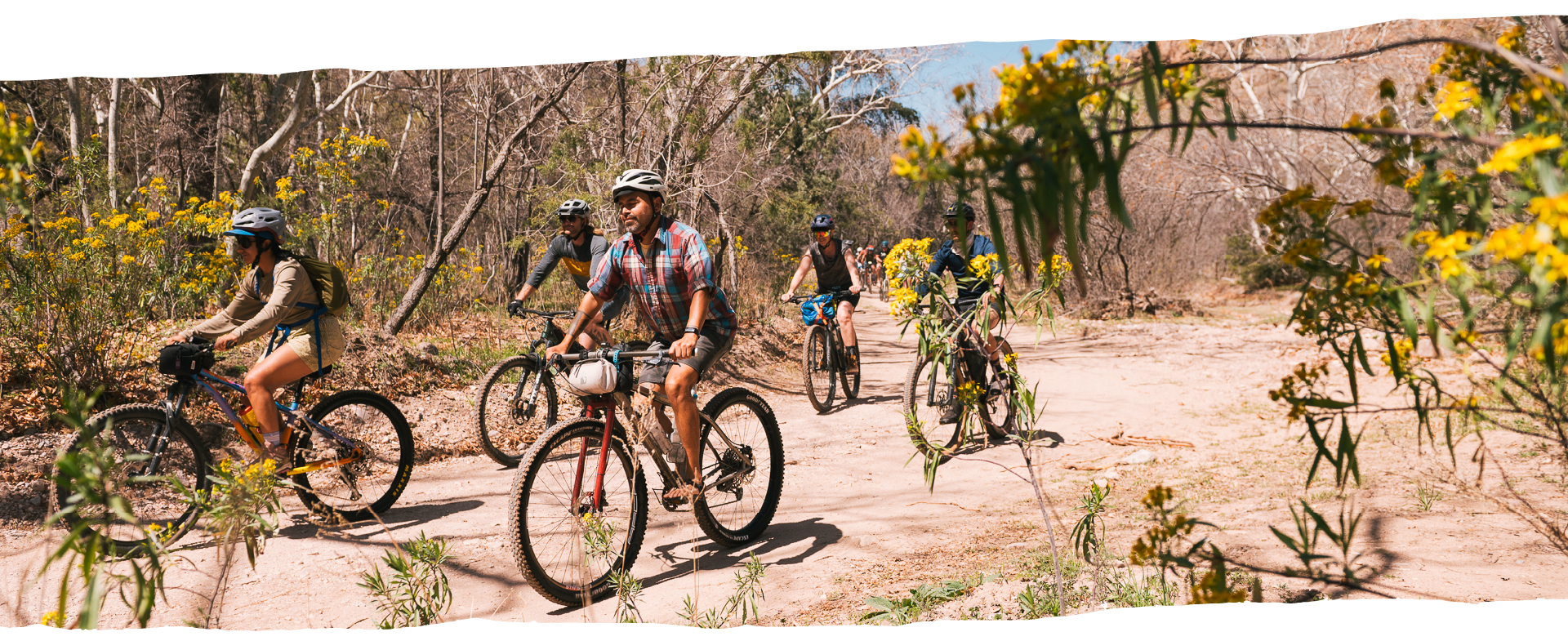
Saturday's rides are a highlight of Ruta del Jefe, with five routes offering different distances, elevation profiles, and technical challenges.
All routes travel through the beautiful and rugged Sky Islands region. Expect a combination of remote dirt roads, climbing, descending, and terrain that may feel very different from what you're accustomed to riding.

El Jefe
Distance
78 miles
Elevation Gain
6,000 ft
Terrain
Adventure
Sombra
Distance
68 miles
Elevation Gain
4,447 ft
Terrain
Gravel+
Cinco
Distance
55 miles
Elevation Gain
4,969 ft
Terrain
Adventure
O:SHAD
Distance
45 miles
Elevation Gain
3,289 ft
Terrain
Gravel+
Adela
Distance
30 miles
Elevation Gain
1,859 ft
Terrain
Gravel
Understanding the terrain
Adventure:
Dirt roads and doubletrack with potentially steep, loose, rocky, uneven, and technical sections. Some hiking or walking your bike may be necessary.
Gravel+:
Dirt roads and doubletrack with some rough or challenging terrain, generally less technical than Adventure routes.
Gravel:
Dirt roads with less technical terrain, though steep climbs, loose surfaces, and changing conditions are still possible.
How to choose
Consider more than just mileage. Elevation gain, terrain difficulty, weather, and your experience riding in remote places all influence how challenging a route will feel.
Ask yourself:
How comfortable am I riding loose dirt, rocks, and steep descents?
Have I completed rides with similar climbing and mileage?
How much time am I comfortable spending on the bike?
Am I prepared to navigate and manage basic mechanical problems independently?
Remember: Ruta del Jefe is not a race. There are no prizes for finishing first, and there's no shame in walking your bike, taking breaks, or choosing a shorter route. Choose an adventure that allows you to enjoy the landscape and experience.

Prepare Your Body
You don't need to train like a competitive racer to participate in Ruta del Jefe, but you should arrive with a level of fitness appropriate for your chosen route.
The combination of distance, climbing, rough surfaces, and potentially warm temperatures can make riding in the Sky Islands more demanding than the mileage alone might suggest.
Build endurance gradually
In the weeks and months leading up to the event:
Ride consistently and gradually increase your time on the bike.
Work toward completing rides with similar distances and elevation gain to your chosen route.
Practice riding on dirt roads and uneven surfaces.
Include climbing and descending in your training.
Practice eating and drinking while riding.
Build in recovery days and avoid sudden increases in training volume.
If you're newer to off-road cycling, consider joining local gravel rides or finding a skills clinic to build confidence.
Practice riding on loose terrain
The Sky Islands are known for loose gravel, rocky roads, steep climbs, and occasionally sandy or rutted conditions.
Before arriving, practice:
Braking and descending on loose surfaces.
Maintaining traction while climbing.
Choosing lines through rocks, ruts, and uneven terrain.
Dismounting and walking your bike when conditions exceed your comfort level.
Walking is always an acceptable choice. Being able to recognize when to get off your bike is an important backcountry riding skill.
Train with your gear
Complete a few longer rides carrying the water, food, clothing, and equipment you plan to bring on Saturday.
A bike can feel different when loaded, especially on technical terrain.
Prepare Your Bike
Your bike should be in good working condition before arriving. The remote nature of the routes makes mechanical preparation particularly important.
Get a pre-event tune-up
We recommend having your bike inspected by a qualified mechanic before traveling to Patagonia.
Pay particular attention to:
Tires, tread, and tubeless sealant
Brake pads and braking performance
Chain and drivetrain wear
Shifting adjustments
Wheels, spokes, and bearings
Bolts, racks, and bike bags

Choose appropriate tires and gearing
Not every route requires the same equipment. Research the terrain of your selected route and choose tires appropriate for loose dirt, rocky surfaces, and potentially rough doubletrack.
Low gearing can make the steep climbing much more manageable.
We strongly recommend testing your setup well before the event rather than making major equipment changes at the last minute.
Learn basic trailside repairs
At a minimum, you should know how to:
Repair a flat tire
Install a spare tube
Fix a broken chain using a quick link
Address minor shifting problems
Bring the tools and spare parts needed for your specific bike.
Mechanical support may be available at designated locations, but participants should not depend on immediate assistance in remote sections of the routes.
Navigation & Backcountry Safety
Ruta del Jefe routes travel through remote parts of southern Arizona, where cell service can be unreliable or nonexistent.
Participants are responsible for understanding their routes and carrying the supplies needed to travel safely.
Prepare your navigation
Before Saturday:
Download the official GPS route files.
Load your route onto a GPS device or navigation app.
Download offline maps.
Mount your GPS device or phone securely to your handlebars. We strongly encourage using a handlebar-mounted navigation device so you can follow your route without repeatedly stopping to pull out your phone or GPS. Choose a sturdy mount appropriate for rough terrain, position the screen where it's easy to glance at, and test the setup on a ride before arriving. Always stop somewhere safe if you need to study your map or make navigation adjustments.
Fully charge your navigation devices.
Carry backup power when appropriate.
Familiarize yourself with the course, aid stations, and potential bailout options.
We recommend using Ride with GPS to review your route in advance.
Official routes and participant-specific navigation information will be shared before the event.

Know your limits
Keep track of the time, your energy, and your available food and water.
If you are struggling, take a break, assess your options, and make conservative decisions. Do not continue into remote terrain if you are unsure you can safely complete the next section.
Prepare for emergencies
Carry emergency contact information.
Bring a basic first-aid kit.
Know how to share your location from your GPS device or phone.
Consider carrying a satellite communication device, especially on longer routes.
Familiarize yourself with event emergency procedures.
Medical personnel and event support will be available, but response times may be extended because of the remoteness of the terrain.
Hydration, Nutrition & Weather
Southern Arizona in early April can bring a wide range of conditions, from chilly mornings to hot afternoons, strong winds, and occasional rain.
The combination of dry air, sun exposure, and physical exertion can increase your hydration needs.
Water
Plan to carry 2–3 liters of water while riding.
Your individual needs may vary depending on the weather, route distance, intensity, and time between water sources. Some riders may need additional capacity.
Start your ride well hydrated.
Review aid station locations and water availability.
Drink regularly throughout the day.
Consider electrolytes, particularly during warm weather or prolonged exertion.
Don't assume natural water sources are safe to drink.
Nutrition
Long rides require consistent fueling. Practice eating on the bike before the event so you know what works for your body.
Bring enough food for your planned ride duration, plus a little extra in case your day takes longer than expected.
Energy bars, sandwiches, fruit, dried fruit, and other familiar snacks can all work well.
Don't rely entirely on aid stations for your nutrition. Carry the food you need between stops.
Dress for changing conditions
Bring layers that will keep you comfortable through temperature changes.
We recommend:
Lightweight wind or rain jacket
Insulating layer for cold mornings
Sun-protective clothing
Sunglasses and sunscreen
Gloves appropriate for the conditions
Check the weather forecast before traveling and again before Saturday's rides.
Prepare for Life at Basecamp
Our home for the weekend is the Borderlands Restoration Network Native Plant Nursery & Seed Lab in Patagonia, Arizona.
Basecamp is where we'll gather for meals, workshops, music, conversations, and time together between adventures.
Camping
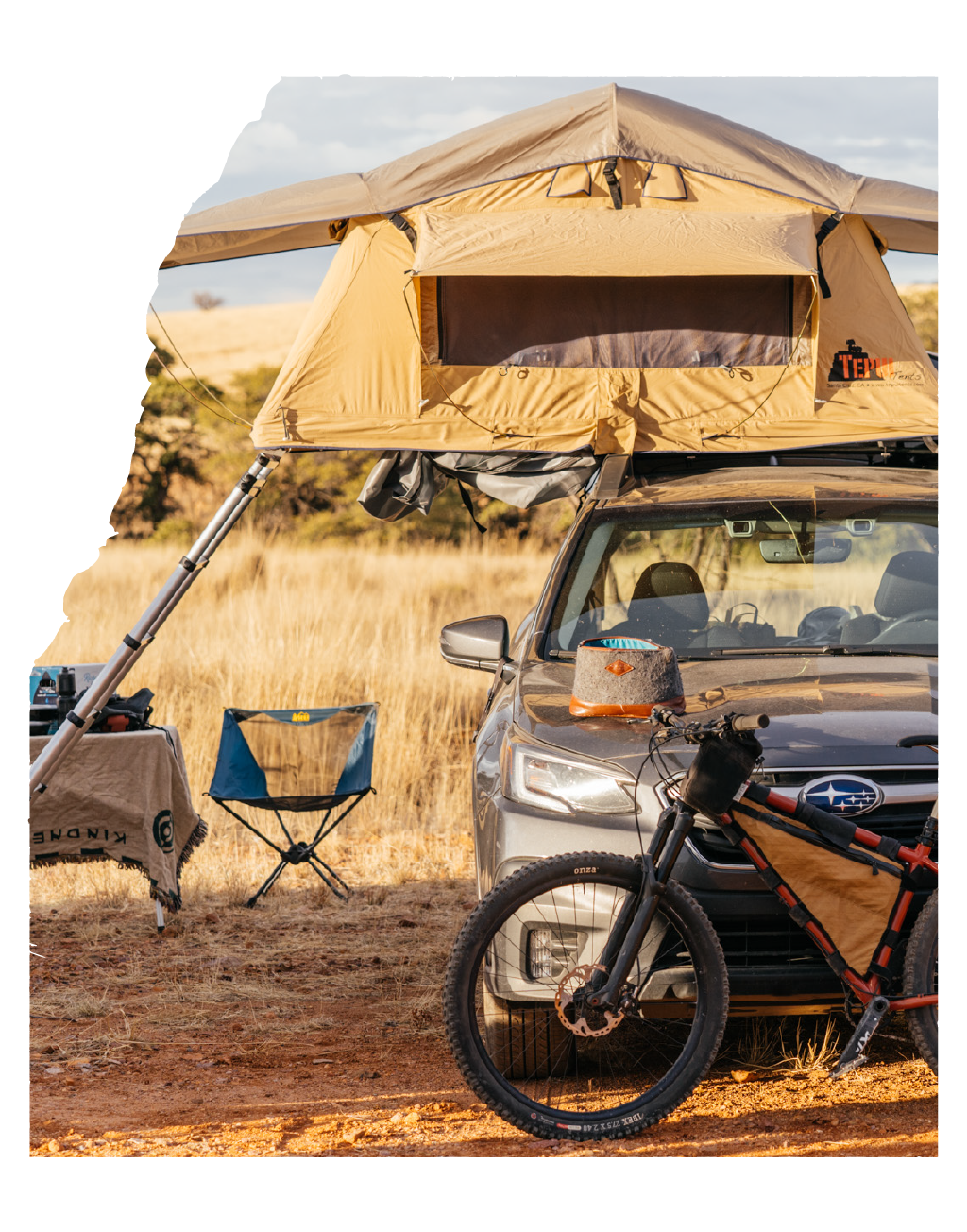
Camping is included with your registration.
Bring everything you need to sleep comfortably, including a tent, sleeping pad, and sleeping bag appropriate for chilly nights.
What to expect:
Portable toilets and handwashing stations
No showers
Limited opportunities for charging electronics
Variable cell service
No campfires
No ice available for purchase at basecamp

Meals
Your registration includes three breakfasts and three dinners, with vegan options available.
Participants are responsible for their own lunches, snacks, and ride nutrition.
You must bring your own reusable plate, bowl, mug, and utensils for meals.
We encourage you to minimize single-use packaging and help us reduce waste throughout the weekend.
For a complete list of recommended equipment and personal items, see our Ruta del Jefe Participant Packing List.
Learn ABout the Borderlands Before You Arrive
One of the most meaningful parts of Ruta del Jefe is the opportunity to learn about the region from the people and organizations working to protect and support it.
The Arizona–Sonora borderlands are home to extraordinary biodiversity, Indigenous communities, shared watersheds, agricultural traditions, and important wildlife corridors.
They are also shaped by complex challenges involving migration, border infrastructure, water, and environmental conservation.
We encourage everyone to spend a little time learning about the place we'll be visiting.

Start with the six organizations we're supporting
Recommended viewing
The River and the Wall
A documentary exploring the ecological and human impacts of border wall construction through an adventure along the Rio Grande.
American Scar
A short documentary examining the environmental impacts of border wall construction in southern Arizona.
We've also created a Community Impact Fundraising Guide with recommended articles, books, films, and additional resources for learning about the region.
You don't need to become an expert before arriving. Bring your curiosity, thoughtful questions, and a willingness to listen and learn.
Prepare to Participate in the Full Experience
While Saturday's rides are a major part of Ruta del Jefe, some of the most meaningful experiences happen off the bike.
Throughout the weekend, you'll have opportunities to:
Learn from local organizations through hands-on workshops.
Join guided walks, rides, and other educational activities.
Explore issues affecting the borderlands.
Share meals and conversations with fellow participants.
Enjoy music, community gatherings, and time together at basecamp.
Reflect on how to carry what you've learned into your own community.
We encourage you to participate in the educational programming and approach the event with an open mind.
Support the Community Impact Fundraiser
As part of Ruta del Jefe, participants are coming together to raise $100,000 for six organizations working throughout the borderlands.
If you haven't already, start sharing your fundraiser with friends, family, coworkers, and your wider community.
Fundraising is an opportunity to introduce others to the people, places, and issues that make this region special.
Our Community Impact Fundraising Guide includes sample messages, outreach ideas, and resources to help you get started.

Travel & Arrival Preparation
Patagonia is a small community in southern Arizona, approximately 18 miles northeast of Nogales.
Please plan your travel carefully, especially if you're flying into the region or transporting a bike.
Before departing
Confirm your travel arrangements and expected arrival time.
Review basecamp directions and event check-in instructions.
Check your bike and equipment one final time.
Download necessary maps and event information for offline access.
Review the weekend schedule and activity sign-up instructions.
Carry appropriate identification and travel documentation.
A note aBout the Border region
Ruta del Jefe takes place near the U.S.–Mexico border. You may encounter U.S. Border Patrol vehicles, personnel, and immigration checkpoints when traveling in the region.
We encourage participants to familiarize themselves with the realities of the borderlands, respect local communities, and prepare appropriately for their own travel circumstances.
If you have questions or concerns about traveling to the region, please reach out to the event team before arriving.

Final Preparation Checklist
-
Confirm your Saturday route selection.
Complete a ride with similar terrain and climbing.
Schedule any needed bike maintenance.
Review the event schedule and educational programming.
Check your camping and riding equipment.
Continue sharing your Community Impact Fundraiser.
Read or watch at least one resource about the borderlands.
-
Download and review official GPS routes.
Install and test your handlebar-mounted navigation device.
Review aid station locations and safety information.
Check weather conditions.
Charge GPS devices, lights, and power banks.
Purchase ride food, snacks, and electrolytes.
Pack your reusable plate, bowl, mug, and utensils.
Confirm travel details.
Review participant communications for any last-minute updates.
-
Eat a substantial breakfast.
Carry 2–3 liters of water, or more if conditions require.
Pack sufficient food and nutrition.
Check tire pressure, brakes, and equipment.
Confirm your route is loaded and accessible offline.
Make sure your navigation device is securely mounted and visible.
Carry your repair kit, layers, and emergency information.
Check in and follow the event's rider tracking procedures.
Be prepared to change your plans if conditions require it.
Come Prepared, Stay Curious, and Enjoy the Experience
Ruta del Jefe is an opportunity to explore a remarkable place, challenge yourself in ways that feel meaningful, and build connections with people and organizations working throughout the borderlands.
Prepare thoughtfully, respect your limits, look out for one another, and make time for everything this gathering has to offer.
We can't wait to welcome you to Patagonia!